
Need of Sports Management Education
Everyone knows how to shave, and many people do it themselves. But when it comes to a good haircut, we seek the expertise of a trained barber. When a barber positions himself as a hairstylist, beautician, and grooming consultant, he delivers superior customer satisfaction—and earns significantly more than an ordinary barber.

Centuries ago, physicians had no formal degrees. They practised freely, and even kings never demanded for a certified physican. Today, however, we have medical colleges that produce qualified physicians and surgeons, and certification is mandatory. This transformation did not undermine the value of experience; rather, it formalised minimum standards of knowledge, skill, exposure, and supervised practice before one is allowed to treat human lives.

There will always be individuals who learn through informal exposure and experience, and their contribution is valuable. However, a formal education system ensures a minimum benchmark of competence through structured learning, guided exposure, and supervised experience. It does not replace experience—it organises, accelerates, and standardises it.
In the case of sports business, even after more than 60 years since the launch of the world’s first Sports Management programme at Ohio University (USA), many in India still believe that sporting experience and passion alone are sufficient to run the sports industry. This belief is fundamentally flawed.
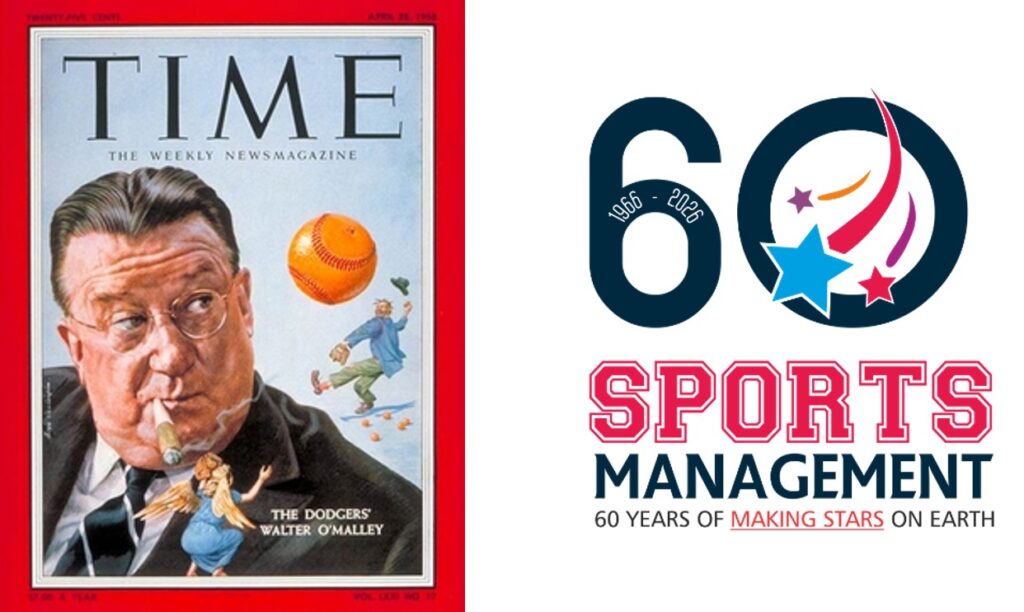
Walter Francis O’Malley, the owner of the Brooklyn / Los Angeles Dodgers of Major League Baseball, was a visionary who recognised that the rapidly growing sports industry required professionals trained in business, marketing, law, finance, and public relations—not just coaches or physical education experts. He was the key influencer behind the world’s first Sports Management programme.
Now, consider the Indian scenario. Why is Indian sport not growing at the desired pace? A major reason is that our sports industry is led by people who lack even the basic principles of sports management. Why did Indian Super League teams beg the AIFF for “no relegation” in the initial years? Because they did not understand sports governance, league economics, stakeholder power dynamics, or their real position in the sports business ecosystem. They believed they were dependents of AIFF, rather than strategic partners with collective bargaining power.
Sports (playing) and sports business are fundamentally different domains. Sports in India is different from sports in the USA or Europe. The business model of cricket is entirely different from that of football, golf, or athletics. Waiting to “learn through life experience” is not enough. A formal education system with structured pedagogy and curriculum enables individuals to understand these fundamentals efficiently and correctly.
The Sports & Management Research Institute (SMRI) does not merely offer programmes in Sports Management, Sports Engineering, and Sports Psychology. Our focus is on providing maximum exposure and real-life experience through FORMULA EX, a pedagogy we have developed. FORMULA EX blends LEARN–PLAY–WORK–INVENT, ensuring that students gain maximum exposure, experience, and expertise even before completing their course.
Our impact includes:
- SMRI students founding India’s first fan-owned football club, Travancore Royals, and launching several other clubs—some successful, some unsuccessful. Both success and failure are powerful teachers.
- Promotion of fan-owned cooperative sports clubs, club-promoted leagues, College Sports Leagues, and School Sports Leagues across India to generate employment and strengthen the grassroots sports ecosystem.
- Revival and promotion of heritage sports such as goti and lagori, alongside the creation and popularisation of new games like pillow fight.
- Active engagement in emerging domains such as sports tourism, sports agriculture, and the sports economy.
- Promotion of innovative formats like 3-Wheeler (autorickshaw) racing, expanding the boundaries of sport and participation.
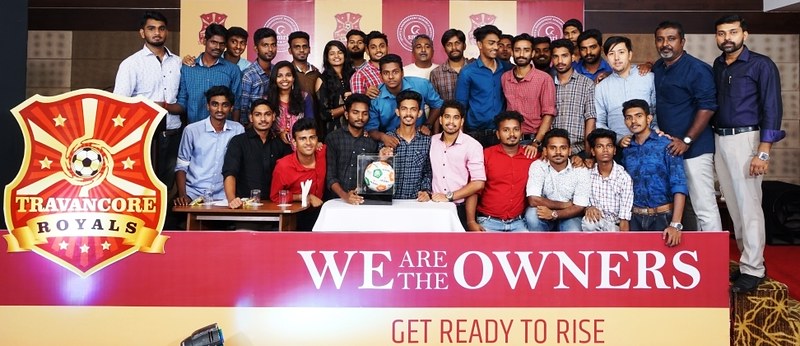
All these initiatives are designed to give students deep exposure, practical insight, and experiential learning.
In addition, SMRI contributes to new knowledge creation through original frameworks such as:
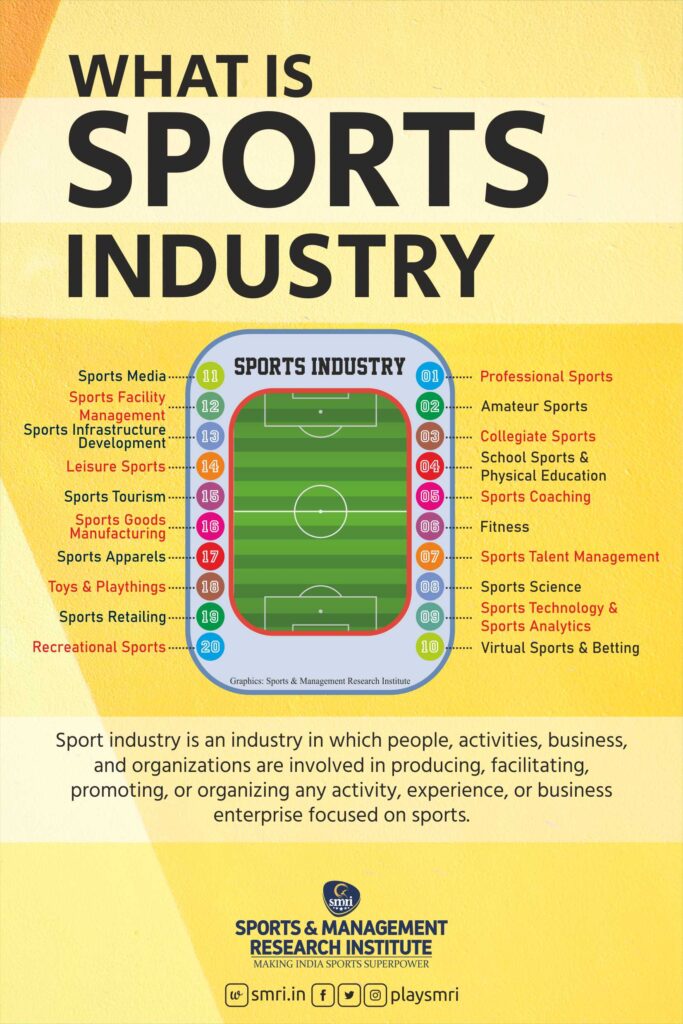
Sports Industry Spectrum
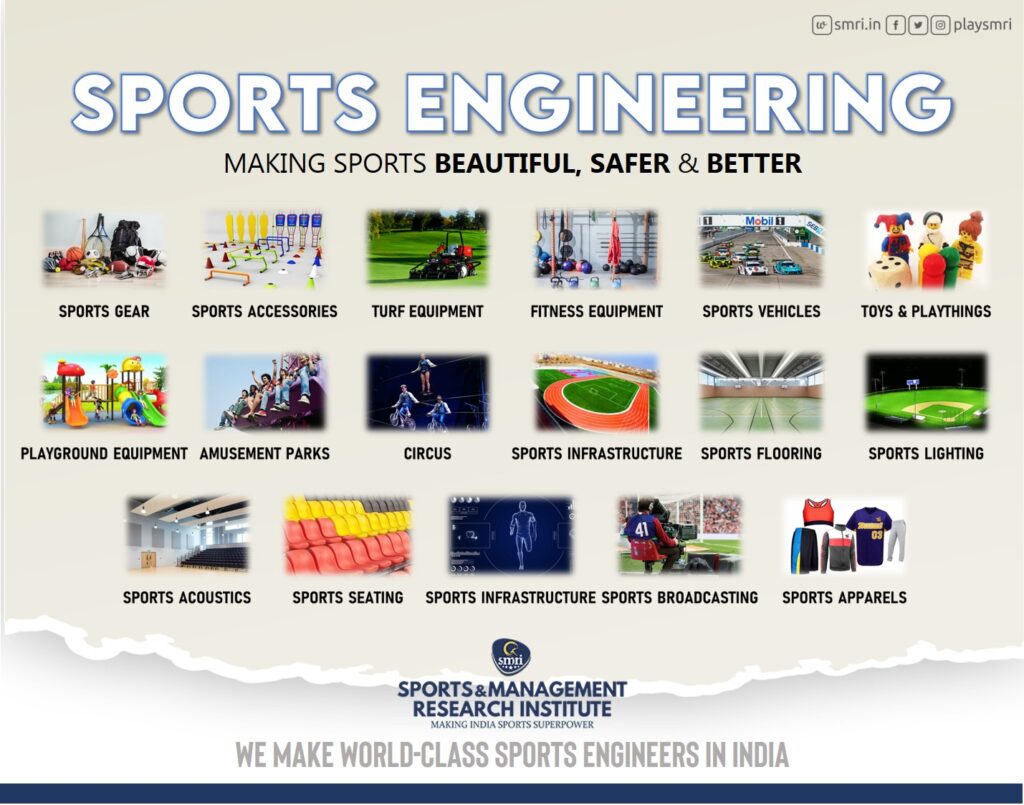
Sports Engineering Spectrum
11 Ps of the Sports Marketing Mix
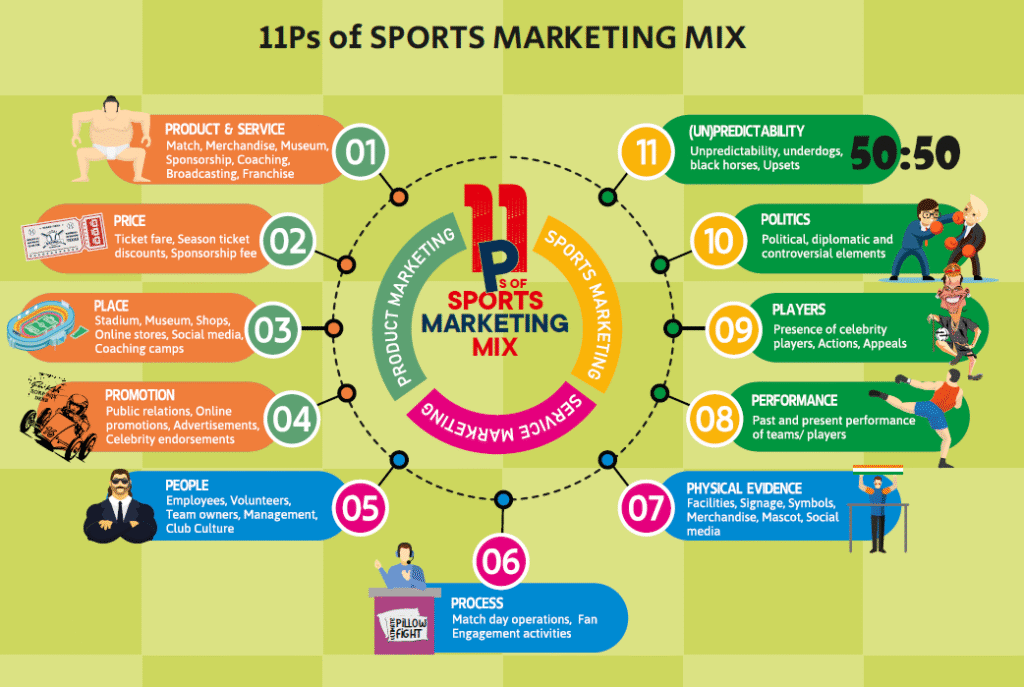
8 Dimensions of Sports

We added the 8th dimension of sports ‘Ethics’ recently. New 8Es of Sports will be updated soon.
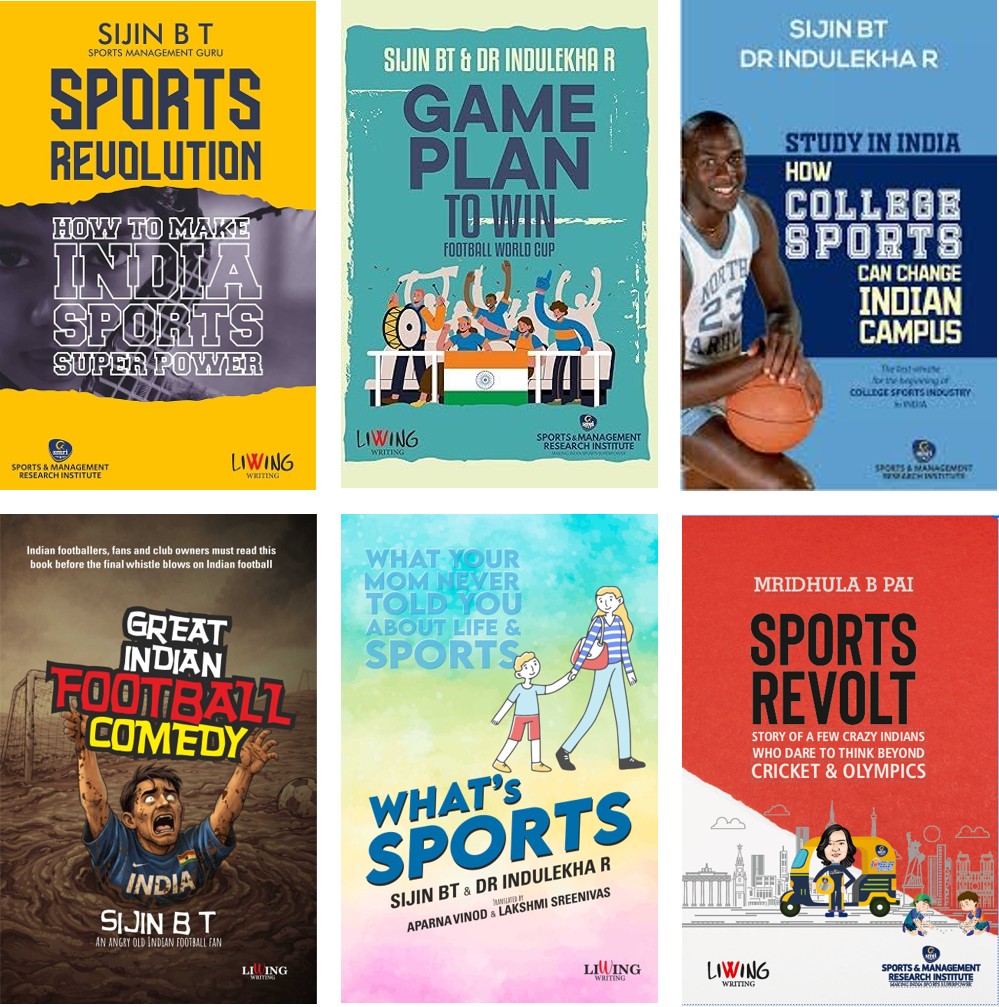
We have published several books, including SPORTS REVOLUTION, GAME PLAN TO WIN WORLD CUP FOOTBALL, SPORTS REVOLT, STUDY IN INDIA – How College Sports Can Change the Indian Campus, GREAT INDIAN FOOTBALL COMEDY, and WHAT’S SPORTS? WHAT YOUR MOM NEVER TOLD YOU ABOUT SPORTS
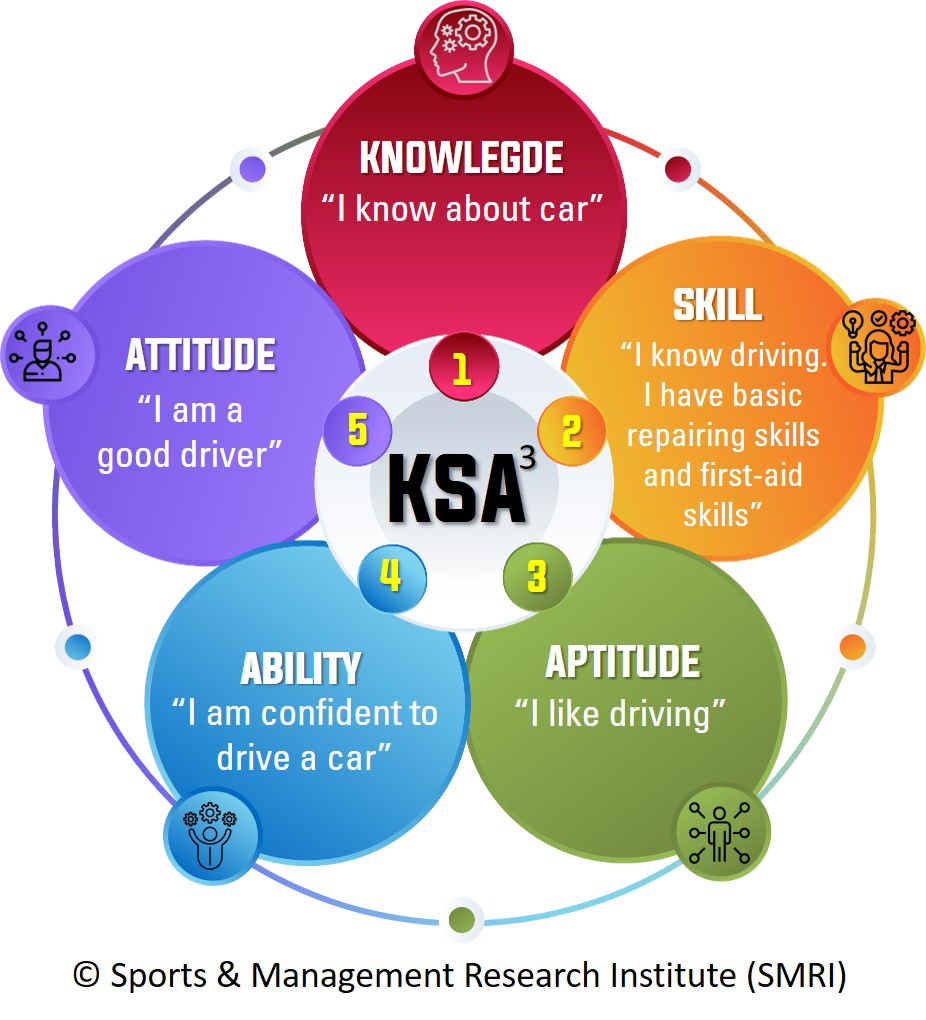
The Indian sports industry is still evolving, and this evolution is being driven by sports management institutions and trained professionals equipped with the right Knowledge, Skills, Aptitude, Attitude, and Ability (KSA³). SMRI has the vision, direction, and expertise to build this ecosystem.
Just as a barber trained in cosmetology will always deliver better results than one without that knowledge, a sports management professional with formal education and structured exposure will always be better equipped to build, manage, and transform the Indian sports industry.